

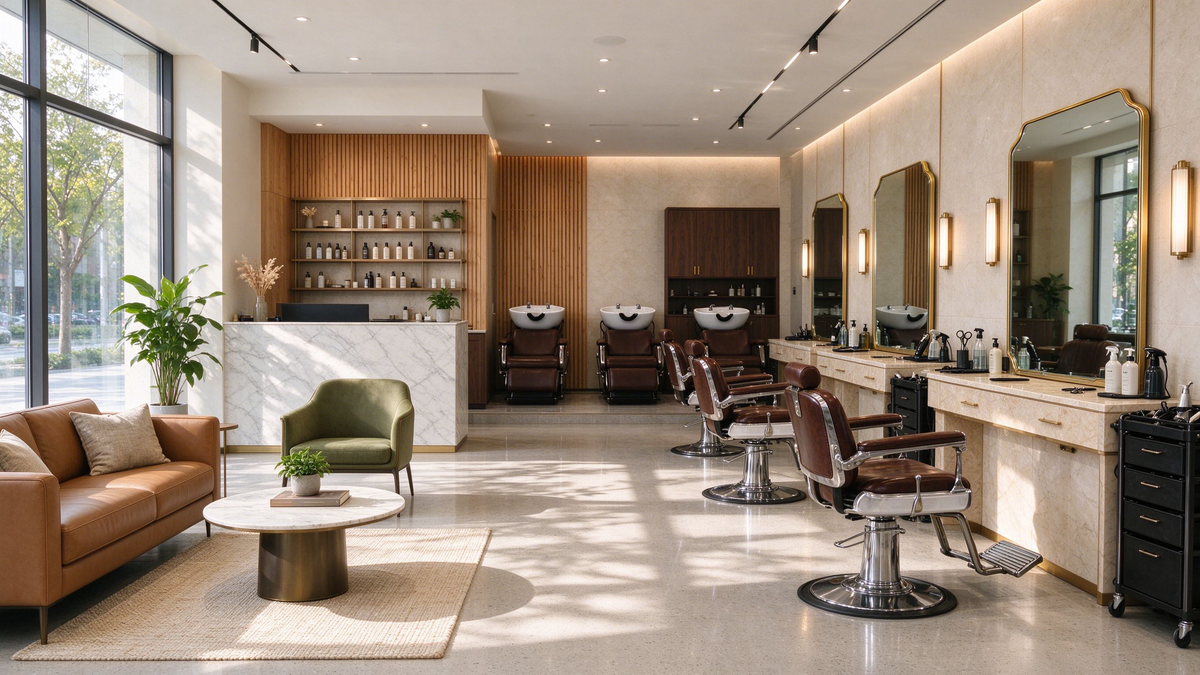
Opening a barbershop is not simply a matter of buying a few barber chairs and filling an empty room. The equipment you choose affects how many clients you can serve, how efficiently your barbers can work, how comfortable customers feel, and how easily the shop can grow later.
A well-planned barbershop should support three things at the same time: service, workflow, and customer experience.
That means the right question is not just:
“What equipment do I need?”
It is:
“What equipment does my shop need to operate smoothly from the first appointment to the last?”
This guide breaks down the essential equipment for opening a barbershop, explains what deserves the biggest share of your budget, and shows how to avoid common setup mistakes.

Start With the Services You Plan to Offer
Before purchasing equipment, define what your barbershop will actually do.
A traditional haircut-focused shop may only need barber chairs, workstations, mirrors, storage, sanitation equipment, and a waiting area.
A more service-driven shop may also offer:
- Hair washing
- Beard treatments
- Hot towel services
- Facial grooming
- Coloring
- Scalp treatments
- Retail products
The wider your service menu becomes, the more important it is to think in work zones instead of individual products.
For example, a client may enter the shop, wait, move to a barber station, receive a wash treatment, return to the barber chair, pay, and leave.
Your equipment should make that journey feel natural.
If employees constantly need to cross the room for towels, tools, products, or shampoo supplies, the shop may look good but still operate inefficiently.
The Barber Chair Is the Center of the Workstation
For most barbershops, the barber chair is the single most important piece of equipment.
It is where clients spend most of their appointment and where barbers perform the majority of their work.
A commercial barber chair should do more than look impressive. It needs to support repeated daily use while allowing the barber to position clients efficiently.
Important features include:
1.Hydraulic height adjustment.
Different barbers work at different heights, and different services require different working positions. A smooth hydraulic system helps reduce unnecessary bending and reaching.
2.Reclining capability.
Recline is especially useful for beard trimming, shaving, facial grooming, and other services that require access to the face and neck.
3.Stable base construction.
A chair should remain stable while clients enter, exit, rotate, and recline.
4.Easy-to-clean upholstery.
Hair, styling products, water, and disinfectants are part of everyday shop use. Commercial upholstery should be practical to maintain.
5.Adequate seat dimensions.
A chair that looks stylish but feels cramped can quickly become a customer comfort problem.
Design matters as well, but it should come after function.
A good barber chair should fit the visual identity of the shop without making the barber adapt their workflow to the furniture.

Give Every Barber a Proper Workstation
A barber chair without an organized station creates unnecessary movement.
Each primary cutting position should ideally have convenient access to:
- A mirror🔗
- Clippers and trimmers
- Combs and brushes
- Hair products
- Disinfected tools
- Towels
- Electrical outlets
- Frequently used accessories
The workstation can take several forms.
A wall-mounted styling station works well when floor space is limited. Larger freestanding cabinets provide more storage but require more room. Some shops use a combination of fixed storage and mobile trolleys.
The goal is not to store everything beside the chair.
The goal is to keep the most frequently used items within easy reach while keeping the visible workspace clean.
This distinction is important.
Too little storage creates clutter. Too much furniture creates a crowded shop.
Barber Trolleys Are Small Equipment With a Big Workflow Impact
Mobile barber carts and trolleys are often treated as accessories, but they can significantly improve efficiency.
A trolley allows a barber to organize frequently used tools and move them between stations when necessary.
This becomes particularly useful when:
- Multiple barbers share equipment
- A shop offers different services at different stations
- Fixed workstations have limited drawer space
- Cleaning teams need easy access to the floor
- The shop layout may change over time
Look for carts with stable wheels, practical drawer layouts, easy-clean surfaces, and appropriate tool storage.
A trolley should support the workstation rather than replace proper storage entirely.
Decide Whether Your Shop Needs a Shampoo Station
Not every barbershop requires a shampoo area.
If most services are dry cuts and basic grooming, adding several shampoo stations may consume valuable floor space without creating enough value.
However, a shampoo station becomes much more important when the shop offers:
- Shampoo services
- Hair coloring
- Scalp treatments
- Longer premium grooming packages
- Salon-style services
This is where many new shop owners make a planning mistake.
They choose a shampoo unit after the rest of the shop has already been designed.
But shampoo stations involve more than furniture. Their position can affect plumbing, drainage, electrical access, ventilation, staff movement, and customer circulation.
For that reason, shampoo equipment should be considered during layout planning, not after construction is nearly complete.
Local plumbing, sanitation, licensing, and building requirements vary, so these should also be confirmed before installation.
Do Not Forget Anti-Fatigue Mats
A barber may spend most of the working day standing.
That makes the floor area around the barber chair part of the workstation too.
A properly sized anti-fatigue mat provides a more forgiving standing surface and can also help define the barber's working zone.
When choosing a mat, pay attention to:
- Chair base compatibility
- Thickness
- Edge design
- Surface texture
- Cleaning requirements
- Floor coverage
A mat should be large enough to support the barber's normal movement around the chair.
An undersized mat may look neat in a product photo but provide very little benefit during real work.
Plan Storage Before the Shop Becomes Cluttered
Storage usually becomes a problem after the shop opens—not before.
At first, the amount of equipment may seem manageable. Over time, however, shops accumulate:
- Extra towels
- Cleaning products
- Replacement blades
- Hair products
- Retail inventory
- Disinfectants
- Gloves
- Disposable supplies
- Tools
- Spare equipment
If there is no clear storage plan, these items gradually appear on countertops, open shelves, waiting-area furniture, and unused corners.
That quickly reduces the premium feel of the space.
A better setup separates storage into three levels:
Immediate-use storage near each barber.
Daily operational storage for towels, cleaning supplies, and frequently replenished products.
Back-stock storage for bulk inventory and replacement supplies.
This approach keeps stations efficient without forcing the shop to display everything it owns.
Think About the Waiting Area as Part of the Business
Waiting furniture may not generate revenue directly, but it shapes the customer's first impression.
The waiting area should reflect how the shop actually operates.
A high-volume walk-in barbershop may require more seating.
An appointment-focused studio may need only a few comfortable seats.
Either way, avoid using the waiting area as leftover space.
Clients should not feel as though they are sitting in the middle of a work zone, blocking barber movement, or watching inventory being unpacked.
Consider comfortable seating, small tables, charging access, product displays, and sufficient circulation space.
The best waiting area is not necessarily the largest one.
It is one that feels intentional.
Sanitation Equipment Is Essential, Not Optional
Professional appearance means very little if the shop does not have an efficient sanitation routine.
Depending on local requirements and the services offered, your setup may require dedicated areas or equipment for disinfecting tools, storing clean and used towels, disposing of blades, handling waste, and washing hands.
The exact requirements differ by state and local jurisdiction, so shop owners should verify regulations with the appropriate barbering or cosmetology authority.
From a layout perspective, however, one principle remains consistent:
Cleaning should be easy to perform correctly.
If employees have to walk across the entire shop every time they need to disinfect a tool or dispose of a used item, compliance becomes harder and workflow becomes slower.
Electrical Access Is Easy to Underestimate
Modern barber stations use more electricity than many first-time owners expect.
A single station may need power for:
- Clippers
- Trimmers
- Hair dryers
- Charging docks
- Lighting
- Phones or tablets
- Additional styling tools
If power access is poorly planned, extension cords quickly appear across counters and floors.
That creates both visual clutter and operational problems.
Electrical planning should therefore happen alongside workstation planning.
Think about where the barber stands, where equipment sits, and where cables will naturally run—not simply where an electrician can most easily install an outlet.
How Many Barber Chairs Should You Buy?
The answer should be based on your business capacity, not simply the size of the room.
A six-chair shop does not automatically generate more revenue than a four-chair shop.
Every chair needs enough surrounding space for:
- The barber to work
- The client to enter and exit
- The chair to recline and rotate
- Tools and carts to remain accessible
- Customers and employees to move safely through the shop
It is usually better to operate four productive stations than squeeze six chairs into a room designed for four.
You should also think about staffing.
Buying eight chairs for a business that expects three working barbers for the first year may tie up budget that could have been used for better workstations, marketing, lighting, or customer experience.
Design for future expansion, but purchase for realistic near-term demand.
A Practical Way to Prioritize Your Equipment Budget
Not every part of the shop deserves equal spending.
A useful way to think about equipment is by asking how often it is used and how directly it affects service quality.
| Priority | Equipment | Why It Matters |
|---|---|---|
| Highest | Barber chairs | Used during nearly every service |
| Highest | Workstations & mirrors | Directly affect barber workflow |
| High | Clippers, trimmers & professional tools | Core service equipment |
| High | Storage & trolleys | Keeps stations efficient and organized |
| High when needed | Shampoo stations | Essential for wash-based services |
| Medium | Anti-fatigue mats | Supports daily working comfort |
| Medium | Waiting furniture | Shapes customer experience |
| Medium | Retail displays | Useful when product sales are part of the business |
| Later upgrade | Decorative furniture & accessories | Important for branding, but not before core operations work |
This doesn't mean design should be ignored.
It means the pieces used hundreds of times every week should receive attention before decorative upgrades.
Avoid the “Buy Everything First” Mistake
Opening a shop creates pressure to make the space look finished before the doors open.
That often leads owners to buy equipment simply because they think a professional barbershop is “supposed” to have it.
A better approach is to separate equipment into three categories:
Required on opening day.
You cannot provide your core services without it.
Required as demand grows.
Useful equipment that becomes necessary when the service menu or team expands.
Nice to have.
Items that improve presentation or convenience but do not directly affect the ability to operate.
This keeps your initial investment focused.
It also gives you the flexibility to learn how customers and barbers actually use the space before filling every corner.
Your Layout Should Follow the Work, Not the Furniture
One of the most important principles in barbershop planning is simple:
Design the workflow first. Place the furniture second.
Imagine a normal appointment from beginning to end.
Where does the customer enter?
Where do they wait?
How do they reach the chair?
Does the barber have to walk around another workstation to reach supplies?
If shampoo service is included, does the client cross through another barber's working zone?
Where do used towels go?
Where are clean tools stored?
Where does payment happen?
These questions often reveal layout problems that a floor plan alone does not show.
A beautiful shop can still be frustrating to work in.
The best layout makes routine movements feel almost invisible.
Equipment Should Support the Identity of Your Shop
Once the operational requirements are covered, equipment becomes an important part of branding.
A classic barbershop may use heavy traditional barber chairs, dark wood stations, vintage mirrors, and warmer finishes.
A modern studio may favor cleaner silhouettes, neutral colors, compact stations, and minimal visual clutter.
A premium grooming lounge may prioritize wider seating, more sophisticated lighting, private service zones, and a more hospitality-driven environment.
There is no single correct aesthetic.
The important thing is consistency.
A chair, cabinet, mirror, trolley, and waiting area should feel like parts of the same business—not products selected independently from different catalogs.
A Simple Starter Setup
For a small professional shop, a practical opening configuration might include four barber stations, four commercial barber chairs, appropriately sized anti-fatigue mats, mirrors and station storage, one or two mobile trolleys, sanitation storage, a compact waiting area, and a shampoo station if wash services are part of the business.
As demand grows, additional chairs, shampoo equipment, retail displays, storage, or specialty service areas can be added.
The important point is that the shop should be complete enough to operate professionally without being over-equipped for its current business volume.
Final Thoughts
The best barbershop equipment list is not the longest one.
It is the one that matches your services, space, staffing plan, budget, and expected customer volume.
Start with the equipment that directly affects daily service: barber chairs, workstations, tools, storage, sanitation, and efficient access to everything your barbers use repeatedly.
Then build outward.
Add shampoo stations when your service model requires them. Add waiting furniture based on customer flow. Add storage before clutter appears. Choose décor after the operational foundation works.
Most importantly, think of your barbershop as a working system rather than a collection of furniture.
When every chair, trolley, station, and storage area has a clear purpose, the result is more than a better-looking shop.
It is a shop that is easier to work in, easier to maintain, and better prepared to grow.



Share:
Barber Salon Trolley Buying Guide: Boost Work Efficiency & Elevate Client Experience